
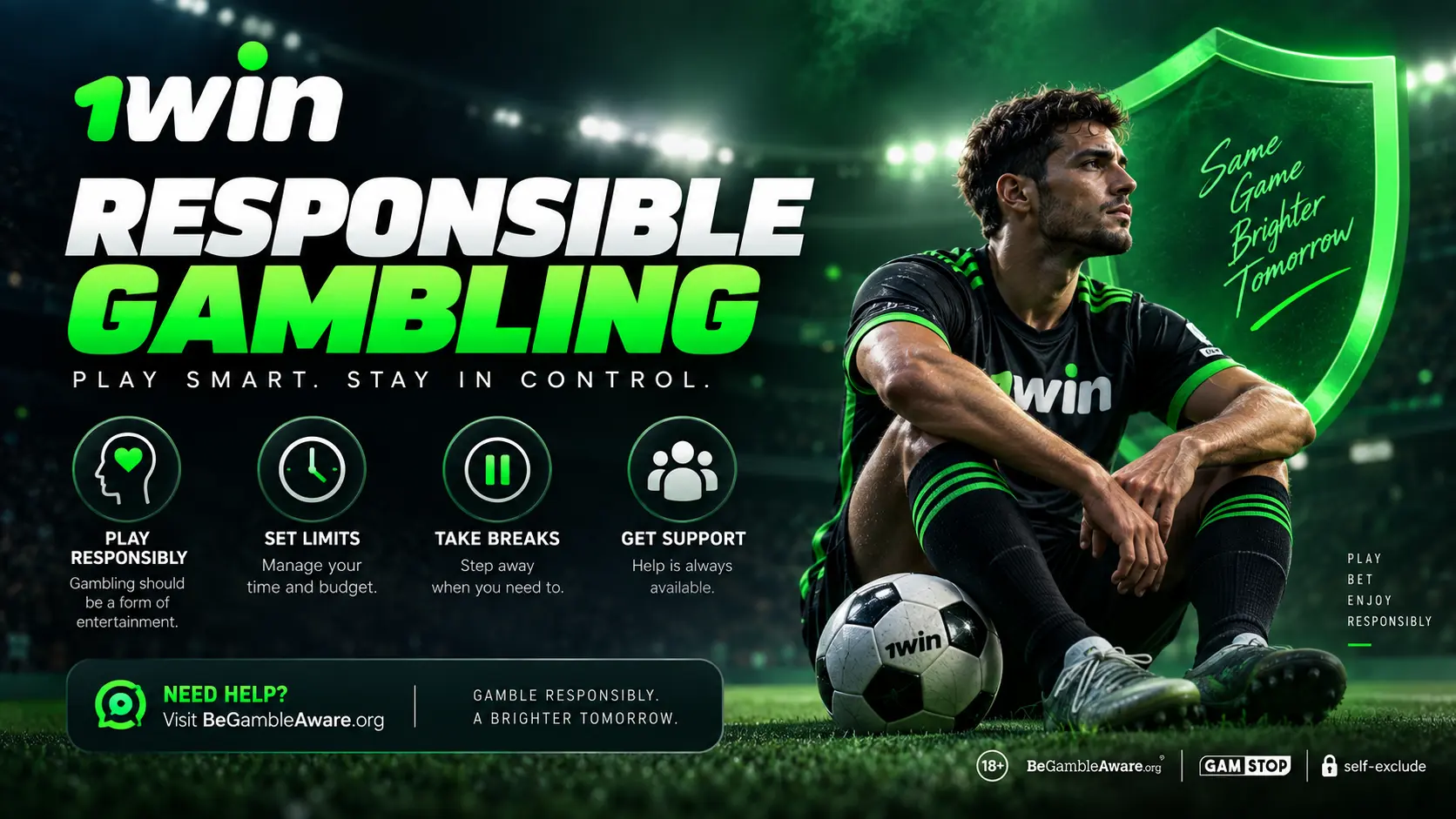
What responsible gambling looks like in practice

A bet on a Premier League match costs you the stake; sometimes you get more back, often you do not. The bookmaker builds a margin into every price, and no tipster, system or “sure odds” removes it. Betting is for adults aged 18 and over, and every site you use should say so.
People often ask whether gambling is good or bad. It is neither in itself, but it always has a cost, and for some people that cost grows into debt, stress and broken trust. The useful question is personal: does your betting stay inside the budget you set, or does it push into rent, school fees, food or borrowed money? If it is the second, it has stopped being entertainment, whatever the result of the last slip.
Three habits do most of the work:
- A fixed budget from spare money, decided before you open the betting site.
- A time limit for each session, because fast markets make it easy to lose track of money and hours.
- A rule that losses are never “won back” by raising stakes.
Set money and time limits before you bet
A limit only works if it is decided while you are calm, not in the middle of a losing run. Write it down and treat the money as spent once transferred.
A budget you can keep
Say ₦20,000 a month is the most you will spend on betting after bills and savings. Split it into four weekly amounts: 4 × ₦5,000 = ₦20,000. Each bet is a small slice of the week, for example ₦500, so 10 × ₦500 = ₦5,000 covers ten bets. When the week’s ₦5,000 is gone, you stop until next week. Unused money does not roll into a bigger bet, and a losing week is not topped up from next week’s share.
Keep betting money apart from everyday money: move only the weekly amount from your bank into the wallet you use for deposits and never link a savings account. We did not find a deposit-limit tool on the 1win Responsible Gaming page, so on that site the spending limit depends on your own rule and on how you move money.
Blocking gambling payments at your bank or wallet
If self-control is not enough, put the block outside the betting site. Ask your bank or wallet app’s support, in writing, whether it can block card or account payments to betting merchants; not every bank or wallet offers this, and the setting differs from one provider to another. Where no block exists, remove saved cards from every betting account, lower your card’s online spending limit if your banking app allows it, and stop topping up the wallet you used for deposits.
Time limits and when not to bet
Set a phone alarm for the end of each session. Do not bet late at night, after drinking, when you are angry about a loss or when you need money urgently. A loss in that state is the one most likely to start a chase.
Warning signs of problem gambling

Problem gambling usually builds through small changes that are easy to explain away. Watch for these signs in yourself or in a friend:
- Chasing losses: raising the stake to win back what was lost.
- Needing bigger bets to feel the same excitement.
- Borrowing money, using loan apps or selling things to fund betting.
- Spending money meant for rent, school fees, family or business stock.
- Hiding betting from family, or lying about how much was lost.
- Feeling restless or irritable when trying to cut down.
- Betting to escape stress, loneliness or boredom.
- Cancelling a pending withdrawal to keep playing with the money.
The last sign deserves a note. 1win support told us that a pending withdrawal can be cancelled in the profile under “Details” by pressing “X” next to the amount. The option exists, so decide in advance that you will not use it to send money back to the betting balance.
A quick self-check
In the last month, did you bet more than you planned? Did you return the next day to win back a loss? Did betting cause an argument at home? Did you feel you had to hide a deposit? One “yes” is a reason to tighten your limits. Several mean it is time to pause and talk to someone, using the contacts below.
What the 1win responsible gaming page offers
For 1win responsible gambling, everything sits on one Responsible Gaming page. When we read it on 08.10.2026, it offered:
- links to four support organisations: GamCare, GambleAware, GamblePause and Gamblers Anonymous;
- self-exclusion through account settings or by writing to [email protected];
- a statement that an excluded account cannot be reopened earlier than 6 months later.
What we did not find there is a deposit-limit tool. We also did not activate self-exclusion ourselves, so we describe the page, not the process from start to finish.
| Parameter | Value |
|---|---|
| Responsible Gaming page links | GamCare, GambleAware, GamblePause, Gamblers Anonymous |
| Self-exclusion route | Account settings or [email protected] |
| Deposit-limit tool on that page | Not found |
| Footer marks | 18+, GamCare and GambleAware logos |
How self-exclusion works in principle
Self-exclusion closes your account for a fixed period that you cannot shorten on a bad day. It works best when done completely: exclude yourself from every betting site you use, delete saved logins and stop following tipster channels. If money is left in the account, ask support in writing how the balance is handled before the exclusion starts. On 1win the withdrawal form opens only after identity verification, so leave time for that step if you want to take a balance out first. An email request with a date is easy to point to later; our notes on reaching 1win support list the other channels the site states.
Where to get gambling help in Nigeria
If betting is already hurting your money, work or family, speak to someone today. Gamble Alert runs a 24/7 help line for Nigeria: +234 916 295 7989, +234 705 889 0073 and +234 705 889 0074 (gamblealert.org.ng). GamCare, GambleAware and GamblePause publish self-help material online, and Gamblers Anonymous runs peer meetings, including online meetings.
While you get support, tell one person you trust, let them see your betting statements and hand them day-to-day control of spare money for a while. Rules on who may offer betting differ from state to state; our page on whether online betting is allowed in Nigeria explains them.
FAQ
Is gambling good or bad?
Gambling is neither good nor bad in itself, but it always costs money and can become harmful. What matters is whether your betting stays within a budget you can afford and never touches money for essentials.
Can betting help me pay off a debt?
No. The margin in the odds works against you over time, and betting to clear a debt usually adds to it; talk to Gamble Alert or a person you trust instead.
Does 1win have self-exclusion?
Yes, the 1win Responsible Gaming page says you can self-exclude through account settings or by emailing [email protected]. According to the page, the account cannot be reopened earlier than 6 months later.
Can I set a deposit limit on 1win?
We did not find a deposit-limit tool on the 1win Responsible Gaming page during our 08.10.2026 check. Ask support whether one is available, and meanwhile limit what you transfer from your bank or wallet app.
Who can I call for gambling help in Nigeria?
You can call Gamble Alert, which runs a 24/7 line: +234 916 295 7989, +234 705 889 0073 or +234 705 889 0074. Their website is gamblealert.org.ng.
How much money should I spend on betting?
Only money left after bills, savings and family needs, fixed before the month starts. Split it into weekly parts and stop when a week's part is used up.